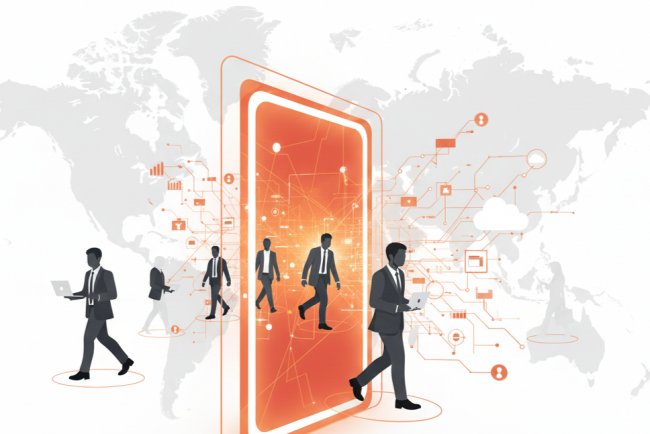
Top Business Trends Countries Are Focusing on in 2026
Discover the real business trends shaping countries in 2026 before they become mainstream. Learn where governments, investors, and industries are quietly placing their bets and why missing these trends could cost you future opportunities.


A global shift you can feel, even if no one is talking about it openly
Every year begins with noise. Headlines, predictions, charts, forecasts. Yet when 2026 began, something felt different. Not dramatic. Not loud. But quietly serious.
Across countries, boardrooms, government offices, startup hubs, and even small family businesses, the same question started surfacing in different forms:
“What actually matters now?”
This is not just a business question. It is a human one.
A shop owner wonders whether expanding makes sense anymore.
A graduate questions whether the skills they studied still hold value.
A policymaker looks at numbers and realizes growth alone is no longer enough.
A founder feels the pressure to build something that survives, not just scales.
And this is where 2026 stands apart.
Countries are no longer chasing trends for attention. They are choosing priorities for survival, stability, and long-term relevance. The business trends of 2026 are not flashy experiments. They are deliberate decisions.
Let us look at what countries across the world are actually focusing on in 2026 and, more importantly, why it matters to real people like you.
Why countries are rethinking business priorities in 2026
If there is one defining feature of the global economy right now, it is caution mixed with urgency.
The past few years taught governments and businesses hard lessons. Over-dependence on single markets failed. Rapid expansion without resilience collapsed. Growth without skills created unemployment instead of prosperity.
So in 2026, countries are asking different questions than they did a decade ago.
Not “How fast can we grow?”
But “How strong can we become?”
Several forces are driving this shift.
Economic uncertainty that refuses to disappear
Inflation may slow, markets may stabilize, but uncertainty remains. Countries have learned that waiting for perfect conditions is unrealistic. Business ecosystems must function even when conditions are uncomfortable.
Technology moving faster than people
AI, automation, and digital tools are no longer optional. But countries have realized technology without human readiness creates inequality. The focus has shifted from tools to adaptability.
Workforce anxiety
People are worried about relevance. Governments are worried about employment. Businesses are worried about skill shortages. This triangle is shaping national strategies more than ever.
Citizens demanding accountability
Consumers are not just buying products anymore. They are questioning values, sustainability, and fairness. Countries cannot ignore this shift.
All of this has led to a quieter but deeper transformation in global business priorities.
Trend 1: Digital economies built around people, not just platforms
Almost every country talks about digital transformation. But in 2026, the focus has changed from building platforms to building participation.
Earlier digital strategies focused on infrastructure. Now they focus on inclusion.
Countries are investing in:
-
Digital public services that reduce friction for businesses
-
Online systems that allow small enterprises to compete with large ones
-
Local digital ecosystems rather than dependency on foreign platforms
What is interesting is that governments are no longer impressed by scale alone. They are asking whether digital growth creates jobs, skills, and local value.
In some countries, this shows up as support for digital MSMEs. In others, it means regulation that protects local innovation. In developing economies, it often means mobile-first solutions that bring informal businesses into the formal system.
For individuals, this trend means one thing clearly: digital literacy is no longer a skill advantage. It is basic survival.
Trend 2: Sustainability moving from branding to business logic
For years, sustainability sounded like a marketing phrase. In 2026, countries are treating it as an economic necessity.
Why?
Because climate shocks are no longer hypothetical. Supply chain disruptions, energy price volatility, and environmental damage have direct economic costs.
Countries are focusing on:
-
Renewable energy as a cost-stability strategy
-
Sustainable manufacturing to reduce import dependence
-
Circular economies that reduce waste and increase efficiency
What makes this trend powerful is that it is no longer limited to developed nations. Emerging economies are also aligning sustainability with employment and export competitiveness.
For businesses, this means sustainability is not about image. It is about access. Access to funding, access to markets, access to long-term contracts.
And for consumers, it is about trust. People are choosing brands that feel responsible, not just affordable.
Trend 3: Local manufacturing and economic self-reliance
The idea of globalization is not disappearing, but blind dependence is.
In 2026, countries are actively strengthening domestic manufacturing capabilities. Not to isolate themselves, but to balance risk.
This does not always mean large factories. Often it means:
-
Supporting small and mid-scale manufacturers
-
Encouraging local supply chains
-
Investing in skills rather than just machinery
Countries that once relied heavily on imports are now realizing the cost of vulnerability. At the same time, export-focused nations are upgrading quality and technology to remain competitive.
For workers, this trend offers something valuable: tangible opportunities. Manufacturing today is not only about labor. It is about process, quality, and problem-solving.
Trend 4: Startup ecosystems with real economic purpose
The startup culture of earlier years focused on valuation. In 2026, countries are focusing on contribution.
Governments are asking harder questions:
-
Does this startup solve a real problem?
-
Does it create employment?
-
Does it strengthen national capability?
As a result, support is increasingly directed toward startups working in:
-
Healthcare access
-
Education and skill development
-
Climate solutions
-
Financial inclusion
-
Infrastructure support services
This does not mean consumer startups are disappearing. It means the ecosystem is maturing.
For founders, this shift is both challenging and refreshing. The emphasis is now on sustainability over speed.
Trend 5: Skill-based economies replacing degree-based systems
Perhaps the most human-centered trend of 2026 is the shift toward skills.
Countries are acknowledging an uncomfortable truth. Formal education systems alone cannot keep up with economic change.
So governments and businesses are focusing on:
-
Skill certification
-
Industry-aligned training
-
Lifelong learning systems
-
Reskilling and upskilling programs
This trend matters deeply to individuals.
A degree is no longer a guarantee. But skills are becoming currency. Countries that succeed in this transition are likely to see stronger employment resilience.
For professionals, this trend offers hope. Reinvention is not only possible. It is encouraged.
How different countries are approaching these trends
Not all countries are moving in the same way.
Developed economies are focusing on optimization. Efficiency, automation, and sustainability dominate their agendas.
Emerging economies are prioritizing inclusion. Access to digital tools, employment generation, and infrastructure development are central.
Resource-rich nations are diversifying. They are investing business revenue into long-term capabilities rather than short-term consumption.
Tech-driven countries are focusing on regulation. They are trying to balance innovation with social stability.
This diversity matters. It means there is no single model to follow. Context matters more than imitation.
What these trends mean for real people
For a small business owner, 2026 is about adaptability. Flexibility matters more than size.
For a student, the future is less about titles and more about relevance.
For a corporate professional, stagnation is risky. Continuous learning is essential.
For an entrepreneur, purpose is becoming a competitive advantage.
These trends are not abstract. They influence daily decisions. Hiring choices. Investment priorities. Career paths.
And perhaps most importantly, they influence confidence. When people understand the direction of change, fear reduces.
Opportunities hidden within these trends
Every shift creates openings.
Digital transformation opens space for service providers, trainers, and consultants.
Sustainability creates demand for new materials, processes, and compliance expertise.
Local manufacturing needs designers, quality specialists, and supply managers.
Skill-based economies reward those who invest early in learning.
The opportunity is not always immediate. But it is visible to those who look beyond headlines.
The uncomfortable challenges countries are facing
Not everything is smooth.
Skill gaps remain wide.
Policy execution is uneven.
Small businesses often struggle to access support.
Technology adoption creates short-term disruption.
Acknowledging these challenges builds realism. Countries that openly address them tend to build trust faster.
Looking beyond 2026: possibilities, not predictions
The coming years will likely reward resilience over speed. Collaboration over competition. Preparation over prediction.
Countries that invest in people alongside technology will adapt better. Businesses that listen to consumers rather than chase trends will last longer.
The future is not fixed. But direction matters.
A final reflection
2026 is not about doing more. It is about doing what matters.
Countries are choosing depth over noise. Stability over spectacle. Human capacity over hollow growth.
For readers, the question is simple but powerful:
Where do you fit into this shift?
Your answer does not need to be immediate. But awareness is the first step.
Frequently Asked Questions (FAQs)
What are the top global business trends in 2026?
Digital inclusion, sustainability, local manufacturing, skill-based economies, and purpose-driven startups dominate global focus.
Why are countries focusing on sustainability in business now?
Because environmental risks directly affect economic stability and long-term growth.
How do these trends affect job seekers?
They increase demand for adaptable skills, continuous learning, and sector-relevant expertise.
Are startups still important in 2026?
Yes, but with stronger emphasis on real economic contribution rather than valuation alone.
Which countries benefit most from these trends?
Countries that align policy, education, and industry collaboration tend to benefit the most.
How can individuals prepare for these changes?
By staying informed, upgrading skills, and aligning career or business choices with long-term trends.
What's Your Reaction?