UPI’s Global Expansion Is Redefining How the World Pays
What Indian Businesses Must Understand Before Everyone Else Catches Up

Introduction: A Silent Revolution That Started at Home
A few years ago, digital payments in India were still associated with wallets, cards, and complicated processes. Today, a street vendor, a startup founder, and a multinational company can all accept payments using the same system.
UPI did not just change how India pays. It changed how India thinks about money.
Now, that same system is stepping beyond national borders.
UPI’s global expansion is not a financial update. It is a shift in economic influence, consumer behavior, and business operations. And the businesses that understand this early will gain a structural advantage that others will struggle to replicate.
This blog explains what UPI’s international growth really means, how it affects Indian businesses and global markets, and why payment systems are becoming the foundation of business intelligence, not just transactions.
Read this fully. Payments are no longer the last step in business. They are the starting point of strategy.
Understanding UPI’s Global Journey
UPI was designed to solve a uniquely Indian problem. It focused on simplicity, interoperability, and real time settlement.
What the world is now realizing is that these features are not local advantages. They are global solutions.
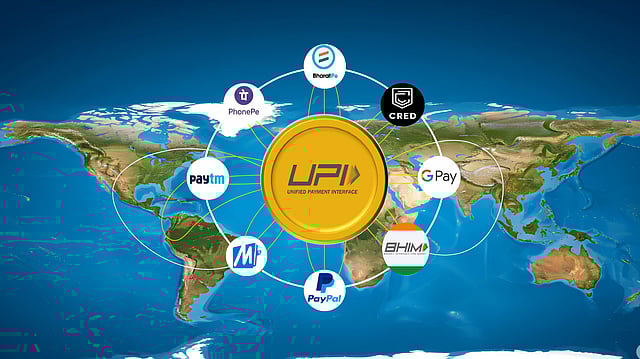
UPI has already begun integration in multiple countries through partnerships with banks, payment networks, and regulators. These integrations allow Indian travelers, businesses, and eventually foreign users to transact seamlessly.
This expansion sends a clear message. India is no longer just adopting global financial systems. It is exporting them.
Why the World Is Paying Attention to UPI
Global payment systems have long been fragmented, expensive, and slow. Cross border transactions involve multiple intermediaries, high fees, and settlement delays.
UPI challenges this model.
It offers real time transactions, low cost processing, and direct bank to bank connectivity. For businesses, this means faster cash flow and lower dependency on legacy payment networks.
Countries and businesses are watching UPI not just as a payment tool, but as a blueprint for modern financial infrastructure.
What UPI’s Expansion Means for Indian Businesses
For Indian businesses, UPI’s global reach unlocks new possibilities.
Export oriented businesses can receive payments faster. Service providers can serve international clients with reduced friction. Startups can build global products with local payment familiarity.
However, opportunity comes with responsibility.
As payment systems scale internationally, expectations around reporting, compliance, and transparency increase. Transactions are no longer just sales. They are data points observed by banks, regulators, and partners.
This is where businesses must mature operationally.
Payments Are Becoming Business Intelligence
Traditionally, payments were treated as an endpoint. A customer pays, the transaction ends.
That mindset is outdated.
Every payment contains information about customer behavior, pricing effectiveness, demand patterns, and revenue health.
Businesses that integrate UPI payments into structured POS systems gain visibility beyond collections. They understand what sells, when it sells, and who buys.
When payment data flows into CRM platforms, businesses connect transactions with customer journeys. This transforms raw payments into actionable insights.
UPI’s global expansion amplifies this effect. The volume and diversity of data increase. Only structured systems can handle this scale intelligently.
The Role of POS Systems in a UPI Driven Economy
As UPI adoption grows domestically and internationally, POS systems evolve from billing tools to revenue intelligence platforms.
Businesses using POS systems can reconcile payments automatically, track multi location sales, and maintain transaction histories.
When UPI transactions are recorded through structured POS platforms, businesses reduce disputes, improve audits, and strengthen financial credibility.
This credibility matters more when operating across borders.
Global partners do not trust informal records. They trust systems.
CRM and the Future of Cross Border Customer Relationships
UPI’s expansion also changes how businesses manage customers.
When international customers transact using familiar payment methods, trust increases. But trust must be nurtured.
CRM systems help businesses track customer preferences, purchase history, and engagement patterns.
When CRM platforms integrate payment data, businesses move from transactional relationships to long term engagement.
This becomes critical in global markets where retention is more valuable than acquisition.
Businesses that invest early in CRM infrastructure are better positioned to capitalize on UPI driven international customers.
Compliance and Workforce Readiness in a Global Payment Environment
Global payments invite global scrutiny.
As businesses accept international transactions, they face increased compliance requirements. Reporting accuracy, employee accountability, and operational transparency become essential.
HRMS platforms play a key role here. They centralize employee data, define roles, and ensure accountability across finance, sales, and operations teams.
When employees handle cross border payments, training becomes crucial. LMS platforms help standardize knowledge around compliance, data handling, and customer communication.
This structured approach reduces risk and builds operational confidence.
Trust Is Moving From Brands to Systems
Consumers and partners increasingly trust systems more than promises.
A business that offers seamless UPI payments signals reliability. A business that manages payments professionally signals maturity.
This psychological shift matters.
Trust built through systems reduces friction in negotiations, partnerships, and customer acquisition.
UPI’s global acceptance accelerates this shift. Businesses that align early gain reputational advantage.
Small Businesses and the Global Opportunity
There is a misconception that global payments benefit only large companies.
In reality, small businesses gain the most.
UPI allows small businesses to accept international payments without complex infrastructure. However, without proper systems, this advantage is wasted.
Small businesses that combine UPI with POS and CRM platforms professionalize quickly. They operate like larger organizations without heavy overhead.
This democratization of global commerce is one of UPI’s most powerful outcomes.
International Perspective: Why UPI Challenges Traditional Payment Giants
Global payment giants rely on fee based models and controlled networks.
UPI operates on openness and interoperability.
As more countries explore similar frameworks, global payment dynamics may shift.
Businesses that understand this shift early can adapt pricing strategies, payment partnerships, and customer engagement models.
UPI is not replacing global systems overnight. It is reshaping expectations gradually.
The Role of Gomsu Information Technologies in a Payment Driven Future
Gomsu Information Technologies focuses on building structured digital ecosystems that align with modern payment realities.
By offering POS, CRM, HRMS, and LMS platforms, Gomsu enables businesses to move beyond basic transactions toward integrated operations.
As payment systems like UPI expand globally, businesses need platforms that handle complexity without increasing confusion.
The focus is clarity, control, and scalability.
Future Outlook: Payments as the Core of Business Strategy
In the coming years, payments will not sit at the end of the customer journey. They will shape pricing, marketing, compliance, and growth decisions.
UPI’s global expansion accelerates this transformation.
Businesses that treat payments as strategy outperform those that treat them as utilities.
The difference lies in systems.
Conclusion: UPI Is Not Just a Payment System
UPI represents a shift in how value moves.
It reflects India’s growing influence in global financial infrastructure. It empowers businesses of all sizes. It demands operational maturity.
Those who adapt early build lasting advantage. Those who ignore the shift struggle later.
The future belongs to businesses that connect payments with intelligence, systems, and strategy.
Be Part of the Conversation
UPI’s global expansion is shaping the future of business.
If this article helped you see payments differently, share it with your network.
Comment with your thoughts, questions, or experiences.
Like and share to continue the discussion.
Informed conversations build prepared businesses.
What's Your Reaction?