US–China Trade Tensions: Hidden Impacts on Global Supply Chains
US–China trade tensions are reshaping global supply chains in unseen ways. Learn the hidden business impacts, risks, and how companies can stay resilient in 2025.
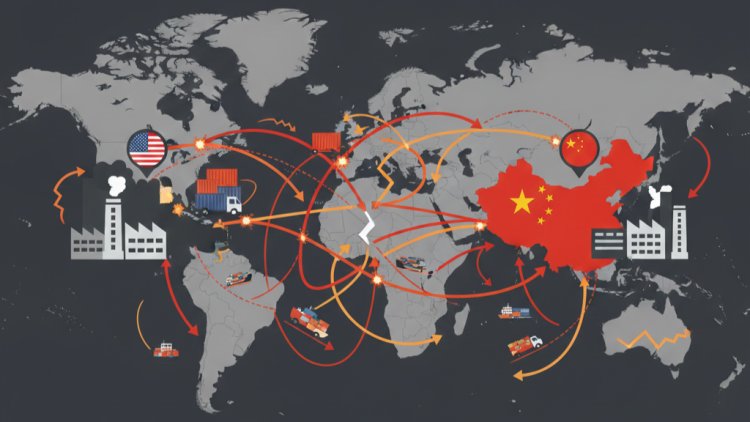

Introduction: The Trade War You Don’t See, But Feel Every Day
Most people think US–China trade tensions affect only governments.
That is not true.
They affect prices in shops, delivery timelines, job security, supplier reliability, and business planning across the world.
Even companies that do not trade directly with the US or China are feeling the pressure.
Supply chains today are deeply connected. When two global giants pull in opposite directions, the ripple effects travel everywhere.
This blog explains, in very simple language, how US–China trade tensions are silently reshaping global supply chains, what businesses often miss, and how companies can prepare for what comes next.
Understanding the US–China Trade Tensions in Simple Terms
The trade tension between the US and China is mainly about control.
Control over:
-
Technology
-
Manufacturing
-
Data
-
Energy resources
-
Strategic industries
Tariffs, sanctions, export controls, and restrictions are tools used by both sides.
On paper, these look like political decisions.
In reality, they are supply chain disruptors.
Why Supply Chains Are the First Casualty
Modern supply chains depend on:
-
Predictable sourcing
-
Stable pricing
-
Timely logistics
-
Long-term contracts
Trade tensions break predictability.
A single policy change can:
-
Increase import costs overnight
-
Delay shipments at ports
-
Force supplier switches
-
Cancel long-term agreements
Businesses often realize the damage only after operations are disrupted.
Hidden Impact 1: Rising Costs Without Clear Reasons
Many businesses notice costs going up but cannot trace the cause.
The reason often lies upstream.
Tariffs on raw materials or components in China increase prices for manufacturers. Those manufacturers pass the cost forward. Distributors pass it again.
By the time the cost reaches the end business, the original reason is invisible.
Profit margins quietly shrink.
Hidden Impact 2: Supplier Instability and Sudden Shortages
Suppliers caught between US and China restrictions face uncertainty.
Some shut down.
Some relocate.
Some change priorities.
This creates:
-
Sudden shortages
-
Inconsistent quality
-
Unreliable delivery timelines
Businesses relying on single-country sourcing are most vulnerable.
Hidden Impact 3: Shift of Manufacturing to New Regions
To reduce risk, companies are moving production to:
-
India
-
Vietnam
-
Mexico
-
Eastern Europe
This shift sounds positive, but it creates new challenges:
-
New compliance rules
-
Workforce training needs
-
Vendor vetting issues
-
Infrastructure gaps
Supply chain diversification requires strong internal systems.
Hidden Impact 4: Technology and Data Restrictions
Trade tensions are no longer only about goods.
They are about technology and data.
Restrictions on:
-
Semiconductors
-
AI tools
-
Cloud infrastructure
-
Software dependencies
This affects:
-
Manufacturing automation
-
Inventory systems
-
Customer data platforms
-
HR and payroll tools
Businesses must ensure their tech stack is future-safe.
Why Operational Visibility Matters More Than Ever
In uncertain times, visibility is power.
Businesses need to know:
-
Where supplies come from
-
How costs are calculated
-
Who handles which processes
-
What data is stored where
Disconnected systems create blind spots.
Integrated systems create control.
Role of CRM in Supply Chain Stability
CRM systems are not just for sales.
They help businesses:
-
Track supplier and partner relationships
-
Monitor contract histories
-
Maintain communication records
-
Forecast demand shifts
When supply chains change fast, relationship data becomes critical.
HRMS and Workforce Adaptability
Supply chain shifts require people to adapt.
New locations mean:
-
New hiring
-
New labor laws
-
New payroll structures
-
New compliance needs
An HRMS system ensures:
-
Workforce data accuracy
-
Legal compliance across regions
-
Smooth onboarding
-
Transparent payroll management
Without HRMS, expansion becomes chaotic.
LMS and Skill Readiness During Supply Chain Changes
Moving manufacturing or logistics requires new skills.
Employees must learn:
-
New tools
-
New compliance rules
-
New operational processes
An LMS helps businesses:
-
Train teams quickly
-
Standardize knowledge
-
Reduce errors
-
Maintain audit-ready learning records
Training speed decides success during transitions.
POS Systems and Real-Time Market Response
Trade tensions affect consumer pricing.
POS systems provide:
-
Real-time sales data
-
Price sensitivity insights
-
Inventory movement tracking
-
Regional demand analysis
This data helps businesses react instead of guessing.
How Gomsu Information Technologies Helps Businesses Stay Resilient
Gomsu Information Technologies provides integrated tools that support businesses during global uncertainty.
Gomsu CRM
Improves supplier, distributor, and customer relationship management across regions.
Gomsu HRMS
Ensures workforce stability, compliance, and scalability during geographic shifts.
Gomsu LMS
Keeps teams trained, aligned, and ready for operational change.
Gomsu POS
Delivers real-time insights to respond to market and pricing fluctuations.
These systems do not remove uncertainty.
They remove confusion.
Psychological Reality: Businesses Fail Due to Delay, Not Crisis
Most businesses do not collapse because of trade tensions.
They collapse because they react too late.
The companies that survive are those that:
-
Build systems early
-
Track data continuously
-
Train people consistently
-
Adapt calmly
Preparedness reduces panic.
What Businesses Should Do Now
-
Review supplier dependencies
-
Diversify sourcing locations
-
Strengthen internal systems
-
Invest in compliance-ready tools
-
Train teams for flexibility
Waiting for clarity is a risk.
Conclusion: Trade Wars Are External, Readiness Is Internal
US–China trade tensions may continue for years.
Businesses cannot control geopolitics.
But they can control:
-
Data
-
Systems
-
People
-
Processes
The strongest supply chains are not the cheapest ones.
They are the most adaptable ones.
Call to Action
If this blog helped you understand the hidden impacts of global trade tensions, share it with your team.
Comment your perspective or experience below.
Like, share, and engage.
Strong discussions create stronger businesses.
What's Your Reaction?