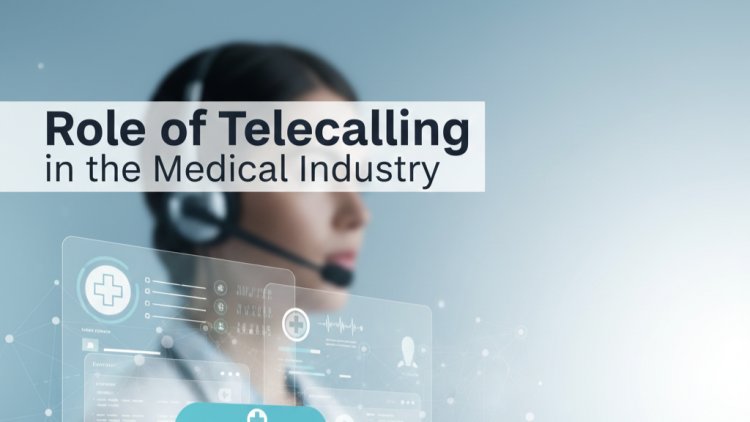
Role of Telecalling in the Medical Industry
Role of Telecalling in the Medical Industry explains how telecallers support hospitals, clinics, and healthcare companies by managing patient communication, appointment scheduling, follow-ups, record updates, and service inquiries. It highlights how telecalling improves patient experience, boosts operational efficiency, and strengthens healthcare service delivery

Introduction: Why Telecalling Has Become the Silent Backbone of Modern Healthcare
Healthcare today is no longer confined to consultation rooms, hospital corridors, or diagnostic centers. A massive percentage of patient interaction now happens outside the hospital and much of it begins, progresses, or concludes through a single channel: telecalling.
Telecalling has quietly evolved from being a basic coordination task to becoming the communication engine of the medical industry. It is the first interaction point for many patients, the guiding voice during moments of uncertainty, the bridge between diagnosis and care, and the follow-up reminder that ensures continuity of treatment.
In an industry where time sensitivity, accuracy, empathy, and confidentiality determine outcomes, telecalling plays a strategic role that goes far beyond receiving calls. It shapes patient experience, operational efficiency, brand trust, and even clinical outcomes.
This blog explores the advanced, multi-layered role of telecalling in the medical ecosystem covering workflows, psychology, compliance, digital transformation, and future pathways.
1. Patient Onboarding: The First Touchpoint That Shapes the Entire Patient Journey
Patient onboarding is not just about collecting details. In healthcare, it sets the tone of trust, clarity, and emotional comfort.
Every telecaller is effectively the hospital’s first representative. Their communication determines whether a patient:
-
Chooses the facility
-
Understands the process clearly
-
Feels safe to proceed
-
Trusts the medical team
Patient onboarding includes tasks such as:
-
Capturing patient demographics
-
Understanding symptoms
-
Scheduling consultations
-
Guiding patients on documentation and requirements
-
Preparing them for tests or procedures
A well-trained telecaller can reduce patient confusion, improve satisfaction, and significantly lower drop-off rates.
Healthcare Reality Check:
Most patients decide whether to continue with a hospital within the first 40 seconds of the call. Voice tone, clarity, and empathy deeply influence that decision.
2. Appointment Management: The Engine That Keeps Medical Workflows Running Smoothly
Hospitals operate on tight, interconnected schedules surgeons, consultants, diagnostic technicians, laboratory paths, and operating theaters all follow structured workflows. Telecalling ensures this chain functions without disruption.
Telecallers handle:
-
Scheduling appointments
-
Avoiding double-booking
-
Rescheduling changes
-
Managing doctor availability
-
Communicating delays
-
Coordinating between multiple departments
-
Reducing no-show rates through reminders
Advanced telecalling systems supported by digital tools (like CRM or HMS integrations) automate reminders, track patient history, and create seamless schedules. Without this structure, patient flow collapses and the hospital experiences operational chaos.
3. Pre-Diagnosis Query Handling: Guiding Patients with Clarity and Sensitivity
Before visiting a clinic or diagnostic center, patients often have concerns such as:
-
What tests are required?
-
How should they prepare?
-
What are the costs involved?
-
How long will the procedure take?
-
What risks are associated?
Telecallers act as the information filter providing accurate, non-clinical guidance while ensuring no misinformation is conveyed.
A well-trained telecaller improves:
-
Patient clarity
-
Procedure preparedness
-
Timeliness
-
Trust
-
Clinical workflow optimization
They help reduce unnecessary footfalls, guide patients to the right departments, and ensure they arrive informed.
Patient Psychology Insight:
Patients asking many questions are not difficult they are scared. When telecallers understand this, communication becomes more compassionate and effective.
4. Insurance Verification and Financial Clarity
Healthcare finances are often confusing. Insurance policies differ, coverage varies, and paperwork can overwhelm patients. Telecalling teams assist by:
-
Verifying insurance eligibility
-
Checking coverage limits
-
Explaining documents required
-
Communicating pre-authorization processes
-
Coordinating with TPA desks
-
Guiding patients on co-pay or exclusions
Clear financial communication reduces disputes, builds transparency, and enhances patient satisfaction.
Digital systems like CRM and POS help telecallers retrieve past records instantly and update billing details accurately.
5. Telemedicine Support: Bridging Patients and Doctors in the Virtual Era
Telemedicine has expanded access to healthcare, especially in rural areas and remote locations. Telecallers support telemedicine workflows by:
-
Registering patients for virtual consultations
-
Guiding them on app usage
-
Sharing meeting links
-
Ensuring they upload necessary documents
-
Helping them troubleshoot connectivity issues
-
Coordinating prescription delivery
Telecalling ensures that virtual healthcare remains structured, smooth, and accessible for every patient regardless of their technical literacy.
6. Emergency Triage Support: The High-Stakes Communication Zone
In emergencies, telecallers act as first responders collecting critical information and routing the patient quickly.
They must:
-
Stay calm
-
Follow structured triage scripts
-
Capture symptoms accurately
-
Connect with the right department
-
Coordinate ambulance dispatch
-
Guide family members on immediate steps
The speed and clarity of this interaction directly influence patient outcomes.
Operational Efficiency Tip:
Using an LMS-based call script training system can significantly reduce telecaller errors during emergency calls.
7. Patient Follow-Ups: Ensuring Continuity of Care
Follow-up calls are essential to:
-
Check recovery status
-
Remind about medication
-
Confirm test results
-
Schedule follow-up consultations
-
Provide procedure preparation guidelines
-
Address concerns patients hesitate to express
This builds long-term patient retention and strengthens the hospital–patient relationship.
Automated follow-up systems (CRM + POS integrations) also reduce oversight and human error.
8. Compliance, Ethics, and Confidentiality in Medical Telecalling
Medical communication runs under strict regulatory frameworks (such as HIPAA in the US, and other regional privacy laws). Telecallers must follow:
-
Data privacy rules
-
Consent protocols
-
Confidentiality guidelines
-
Accurate record-keeping
-
Zero misinformation standards
They cannot make medical promises or diagnosis suggestions. Their responsibility is to communicate clearly, respectfully, and within ethical boundaries.
Digital tools like HRMS, CRM, and secure telecalling dashboards help maintain confidentiality and prevent data mishandling.
9. Telecalling as a Branding Layer: Building Trust Without Advertising
Patients perceive the quality of a hospital not just through clinical excellence, but through communication quality.
Telecalling shapes:
-
First impressions
-
Trust levels
-
Perceived competence
-
Loyalty
-
Long-term patient relationships
Consistent, knowledgeable, and empathetic communication builds a brand image of reliability even before the patient sees a doctor.
10. The Technology Behind Modern Telecalling: The Invisible Support System
Telecalling is no longer dependent only on human skill. Advanced digital tools silently elevate telecalling efficiency:
CRM Systems
Track patient history, preferences, pending tasks, medication routines, follow-ups, and more.
POS and Billing Systems
Help telecallers communicate accurate financial details with real-time data.
HRMS Tools
Improve staffing schedules, training modules, and performance monitoring.
LMS Platforms
Help train telecallers with standard call scripts, scenario-based learning, and compliance education.
Digital Visiting Cards & Digital Communication Tools
Allow telecallers to share links, profiles, doctor details, and service overviews in an organized, professional format.
The key is that these tools do not replace telecallers they enhance them. They reduce errors, speed up information flow, and elevate the patient experience.
11. The Psychological Dimension: Why Telecalling Needs More Than Technical Skill
Telecalling in the medical industry requires deep emotional intelligence because patients often reach out at vulnerable moments.
Telecallers must understand:
-
Fear-based communication
-
Stress responses
-
Hesitation patterns
-
Information overload
-
Emotional triggers
A telecaller who knows how to modulate tone, pace, and wording can convert distress into calm and confusion into clarity.
12. Impact on Hospital Operations and Revenue
Telecalling affects not just communication but the complete business cycle:
-
Reduced appointment gaps
-
Higher outpatient conversion
-
Better follow-up turnout
-
Clarity-driven documentation
-
Improved patient satisfaction scores
-
Streamlined clinical workflow
-
Fewer administrative errors
-
Faster insurance closure
In essence, telecalling is a business driver. The quality of telecaller communication directly influences patient flow and retention.
Conclusion: Telecalling Is No Longer Support It Is Strategic Healthcare Infrastructure
The medical industry depends on telecalling far more deeply than most people realize. It shapes the patient journey from the very first call to the final recovery check-in. It influences trust, clinical preparedness, patient safety, and operational efficiency.
As digital transformation continues to enhance hospitals, telecalling will evolve further with AI assistance, automated workflows, predictive analytics, and integrated patient management systems. Yet the core will remain human: empathy, clarity, patience, and professional communication.
Telecalling is not just a role.
It is the backbone of patient experience.
It is the voice of healthcare.
What's Your Reaction?