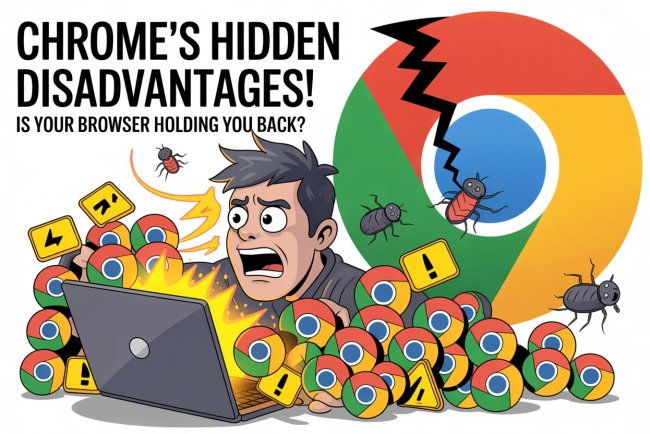
Why Does Google Chrome Take So Long to Open — And What Can You Really Do About It?
Why does Google Chrome take so long to open? Explore the real reasons behind Chrome’s slow startup — from hardware limits and cluttered extensions to system performance. Learn expert troubleshooting steps, practical fixes, and long-term solutions to make Chrome faster and more reliable.


You double-click the Chrome icon, expecting that familiar burst of speed, and instead, your screen just stares back at you. The cursor spins. Seconds feel longer than they should. You even check your Wi-Fi just to be sure — but deep down, you know the problem isn’t your internet connection. It’s Chrome. Again.
It’s a modern-day frustration that millions face daily. Google Chrome, the world’s most popular web browser, once celebrated for its blazing speed and minimalist design, has started feeling heavy, sluggish, even lazy on some devices. But before you rage-quit Chrome and declare your allegiance to Firefox or Safari, let’s pause for a moment.
Asking “Why is Chrome so slow to open?” is a lot like asking, “Why does my car make that weird rattling noise every morning?” The answer? It depends — on where you drive, how you maintain it, what’s under the hood, and sometimes, even how old the car is. Similarly, Chrome’s sluggishness isn’t caused by one single issue. It’s a combination of factors — hardware limitations, background processes, cluttered extensions, outdated software, or even the digital equivalent of dust: cache overload.
So, let’s dig deeper into why Chrome sometimes takes its sweet time to start and, more importantly, what you can actually do about it.
The Analogy: Asking “Why is Chrome Slow?” is Like Asking “Why Does My Car Make a Funny Noise?”
Imagine you take your car to a mechanic and ask, “Why does it sound strange when I start it?” The mechanic can’t give you an instant answer — because there could be a dozen reasons. Maybe the oil is low, the engine is old, the battery is weak, or the fuel system needs a cleanup. The real cause can only be understood after examining how the car is used and maintained.
Chrome works the same way. It’s not just a browser — it’s an ecosystem of processes, scripts, and extensions that all fire up the moment you open it. Each tab you left open, each extension you installed “just in case,” and every cached file from your last session adds a bit of weight to Chrome’s startup routine. Over time, that small weight becomes a noticeable delay.
Here’s what makes the comparison even more fitting: just as every driver’s car behaves differently depending on how it’s driven, every user’s Chrome behaves differently depending on how it’s used. The same version of Chrome can feel lightning-fast on one computer and painfully slow on another. Why? Because performance depends on variables that go beyond Chrome itself.
The Variables: What Actually Slows Chrome Down
When people complain that Chrome is slow, they’re often pointing to symptoms — not causes. The real culprits usually hide in plain sight. Let’s look at the key variables that can affect Chrome’s speed and startup time.
1. Hardware Specifications — RAM and CPU
Chrome is notorious for being resource-hungry. Every open tab, extension, and background task consumes a portion of your system’s memory and processing power. If your computer doesn’t have enough RAM (8GB or more is ideal) or is running an older processor, Chrome will inevitably take longer to start. Essentially, Chrome is trying to juggle too many tasks on limited hardware.
2. The Age and Health of Your Device
Computers age like humans — gracefully for some, painfully for others. If your laptop still runs on a traditional hard drive (HDD) instead of a solid-state drive (SSD), that’s a huge bottleneck. SSDs load programs much faster. On older systems, even a simple program like Chrome can feel like it’s running through molasses.
3. Too Many Extensions and Plugins
Every extension you add to Chrome is like another passenger climbing into an already full car. A few are fine. But dozens of extensions — password managers, ad blockers, grammar tools, screenshot apps — can slow Chrome’s startup dramatically. Even if you’re not using them, many run background processes that consume resources.
4. Outdated Chrome Version
Google frequently releases updates that optimize performance and patch vulnerabilities. If you’re running an outdated version, you might be missing important speed improvements. It’s like skipping your car’s regular servicing and wondering why it feels rough to drive.
5. Malware or Adware
Unwanted software, especially adware, can attach itself to Chrome and slow everything down. These programs often install without clear permission, hijack browser settings, and constantly run background scripts. The result? Longer load times, strange pop-ups, and poor performance.
6. Overloaded Cache and Browsing Data
Chrome stores temporary data — cookies, cached images, site settings — to make pages load faster in the future. But when that data piles up, it can actually have the opposite effect. A cluttered cache can slow Chrome’s startup, increase memory usage, and even cause occasional freezes.
7. Operating System Health
Sometimes, Chrome gets the blame when the real problem lies with the operating system. Outdated drivers, corrupted system files, or low disk space can all impact performance. Chrome can only move as fast as your OS allows it to.
These variables together create a performance landscape unique to every user. The trick isn’t to eliminate them entirely, but to manage them intelligently.
Practical Steps: What You Can Actually Do to Fix It
The good news? You don’t need to be a tech wizard to speed up Chrome. A few targeted changes can make a world of difference.
1. Clear the Cache and Browsing Data
Head to Settings → Privacy and Security → Clear browsing data. Delete cached images and files, cookies, and history (especially if it’s been months since your last cleanup). This can instantly improve startup time.
2. Disable or Remove Unused Extensions
Go to chrome://extensions/ and take a good look. If you see tools you installed long ago but no longer use, disable or uninstall them. The fewer background processes Chrome has to handle at launch, the faster it’ll open.
3. Update Chrome
Open Settings → About Chrome. Updates not only fix bugs but often improve performance and memory efficiency. Think of it as updating your car’s software — smoother handling guaranteed.
4. Run a Malware and Adware Scan
Even a lightweight malware infection can slow Chrome to a crawl. Use Chrome’s built-in scanner (found under Settings → Reset and Clean Up → Clean up computer) or a trusted antivirus tool to remove suspicious programs.
5. Restart or Reset Chrome Settings
If Chrome still feels heavy, consider resetting it to default settings. This can remove hidden configurations or extensions that might be causing trouble. To reset, go to Settings → Reset and clean up → Restore settings to their original defaults.
6. Manage Startup Tabs
If Chrome is set to reopen dozens of tabs from your last session, startup will always feel sluggish. Change your startup settings to “Open the New Tab page” instead of restoring all previous tabs.
7. Upgrade Your Hardware
This is the long-term solution that most people underestimate. Switching from an HDD to an SSD, adding more RAM, or upgrading to a newer CPU can dramatically speed up Chrome — and everything else. Software optimization can only do so much; hardware upgrades provide the real, lasting improvement.
8. Keep Your OS in Shape
Regularly update your operating system, remove unused software, and make sure there’s enough free disk space. Chrome performs best in a healthy digital environment.
Implementing even a few of these steps can make Chrome feel new again — responsive, lightweight, and ready to launch without hesitation.
The Real Insight: Sometimes It’s Not Chrome — It’s the Computer
Here’s a hard truth: Chrome’s not always to blame. The software is designed for modern computing environments — fast processors, solid-state drives, and ample RAM. When those requirements aren’t met, even the best-optimized browser will struggle.
Technology evolves faster than most of us upgrade our hardware. Chrome today isn’t the same browser it was five years ago. It’s more complex, more capable, and more integrated with the web’s changing demands. That means the burden on older systems has naturally increased.
In essence, blaming Chrome for slowness is like blaming a sports car for performing poorly on bad fuel. Sometimes, the problem isn’t the machine — it’s the foundation it’s running on.
The takeaway? If your computer is more than a few years old, an upgrade might do more for your productivity than any Chrome tweak ever could.
The Bigger Lesson: Digital Efficiency Depends on System Optimization
Chrome’s performance story teaches us a larger lesson about technology: efficiency is holistic. You can’t isolate one tool, optimize it in isolation, and expect miracles. True digital speed comes from the synergy of hardware, software, and user habits.
The same applies to every business or workflow. Whether it’s a web browser, a CRM, or a POS system — performance depends on how well everything fits together. Optimizing one layer while ignoring others only delivers temporary results.
System optimization means paying attention to the entire ecosystem — from how data is stored and processed to how interfaces are designed for users. The principle is universal: good performance isn’t accidental; it’s engineered.
Final Thoughts
Chrome taking too long to open isn’t just an inconvenience — it’s a reminder of how digital systems age, evolve, and adapt. Every click, extension, and cached file tells a story about how we use technology. The solution isn’t frustration; it’s understanding.
The more you understand what’s happening behind the screen — the hardware demands, the process load, the software trade-offs — the easier it becomes to maintain a fast, efficient digital experience.
So, before you switch browsers or complain that Chrome is broken, consider tuning up your digital environment. Because true speed doesn’t come from shortcuts — it comes from balance, care, and smart optimization.
Call to Action
Boost your system’s speed and productivity with GOMSU’s performance-driven tools — from CRM and POS systems to HR panels and LMS portals, all designed for fast, responsive, and user-friendly performance. Because true speed starts with smart technology.
What's Your Reaction?